
18/10 Stainless Steel: What the Numbers Mean and Why They Matter
When you see "18/10 stainless steel cookware" on a product label, the numbers refer to the composition of the steel itself. Specifically, they indicate the percentage of chromium and nickel used in the alloy, two elements that contribute to corrosion resistance, durability, and long-term performance.
What is 18/10 stainless steel? It is a stainless steel alloy made with 18% chromium and 10% nickel, designed to improve corrosion resistance, durability, and long-term performance.
In simple terms, 18/10 stainless steel is widely considered the benchmark for high-quality cookware because it combines strength, longevity, and a non-reactive cooking surface.
What Do the Numbers in 18/10 Stainless Steel Actually Mean?
18/10 stainless steel contains:
- 18% chromium
- 10% nickel
These elements are added to steel to improve its performance in the kitchen.
Chromium: Protection Against Corrosion
Chromium is what makes stainless steel "stainless."
When exposed to oxygen, chromium forms an invisible protective layer on the surface of the steel. This layer helps resist:
- Rust
- Corrosion
- Staining
- Surface degradation
Without sufficient chromium, cookware would be much more vulnerable to moisture, acidic foods, and everyday wear.
Nickel: Durability and Surface Stability
Nickel contributes to the structure and finish of the steel.
Its primary benefits include:
- Increased corrosion resistance
- Improved durability
- A smoother, more polished appearance
- Reduced reactivity with food
This is one reason why high-quality cookware often maintains its appearance and performance for years.
Together, chromium and nickel create a material that is durable, stable, and well suited for daily cooking.
Because of its durability and corrosion resistance, 18/10 is commonly considered a premium food grade stainless steel for cookware applications.
18/10 vs. 18/8 vs. 18/0: Is There a Practical Difference?
Yes, although the differences become most noticeable over time.
All three are stainless steel alloys, but they contain different amounts of nickel:
|
Grade |
Chromium |
Nickel |
|
18/10 |
18% |
10% |
|
18/8 |
18% |
8% |
|
18/0 |
18% |
0% |
When comparing 18/8 vs 18/10 cookware, the differences are often subtle during daily cooking but become more noticeable over years of use.
18/10 Stainless Steel
- Excellent corrosion resistance
- Smooth, polished finish
- Highly durable
- Non-reactive cooking surface
18/8 Stainless Steel
- Similar overall performance
- Slightly less corrosion resistance
- May show wear sooner over extended use
18/0 Stainless Steel
- Contains no nickel
- More susceptible to staining and corrosion
- Often used in lower-cost cookware or magnetic exterior layers
In practical cooking situations, both 18/10 and 18/8 can perform well. However, 18/10 is generally regarded as the quality benchmark because of its long-term durability and resistance to corrosion.
Why Steel Grade Matters for Cookware
Steel grade affects more than appearance. It influences how cookware performs over years of cooking.
Corrosion Resistance
Cookware is exposed to:
- Water
- Salt
- Acidic ingredients
- Heat
A higher-quality steel helps resist the effects of these conditions over time.
Food Reactivity
One reason stainless steel remains so popular is that it provides a stable, non-reactive cooking surface.
This is especially important when cooking ingredients such as:
- Tomatoes
- Citrus
- Vinegar-based sauces
- Wine reductions
The goal is not to influence the flavor of the food, but to let the ingredients speak for themselves.
Long-Term Durability
Cookware is an investment. Higher-quality stainless steel is better equipped to maintain its appearance and structural integrity through years of regular use.
Understanding stainless steel grades for cookware helps explain why some cookware maintains its appearance and performance longer than others.
Appearance and Finish Retention
One often-overlooked benefit of higher-quality stainless steel is how well it maintains its finish over time. Daily cooking, cleaning, and exposure to heat can take a toll on cookware surfaces. While all cookware will show signs of use, higher-quality stainless steel is generally better equipped to retain its appearance and resist discoloration through years of regular cooking.
Everyday Cooking Confidence
Quality materials create consistency.
The less you have to think about the cookware itself, the more attention you can give to the food.
How Steel Grade Works Alongside Construction
Steel quality is only one part of the equation.
When evaluating cookware, it helps to think about two separate but equally important factors:
- The quality of the steel
- The way the cookware is constructed
Steel grade determines how the cookware resists corrosion, reacts with food, and maintains its finish over time.
Construction determines how heat moves through the pan and how consistently it performs during cooking.
👉 CLICK TO LEARN: How construction layers work alongside steel grade
For example, in multi-ply cookware, stainless steel provides the cooking surface and durability, while interior layers help manage heat distribution.
Together, material quality and construction determine both performance and longevity.
What to Look for on a Product Label
If you're comparing cookware, the label often reveals more than most people realize.
1. Steel Grade
Look for information such as:
- 18/10 stainless steel
- 18/8 stainless steel
- 18/0 stainless steel
This provides a quick indication of the material being used.
2. Construction Type
Terms such as:
- Fully clad
- Multi-ply
- 5-ply
- Disc-bottom
help explain how heat is distributed throughout the cookware.
3. Interior Design Features
Construction details matter.
Look for features such as:
- Rivet-free interiors
- Sealed rims
- Interior measurement markings
- Rolled pouring rims
- Ergonomic Handles
These features often improve usability and long-term durability.
4. Manufacturing Quality
The overall fit, finish, and engineering of the cookware are often just as important as the material specifications themselves.
Understanding how to read these details allows you to compare cookware more confidently, regardless of brand.
Longevity: Why It Matters Over Time
Cookware is not just about performance today. It’s about how it performs after years of meals, recipes, and everyday use.
18/10 stainless steel is often selected because it helps maintain:
- Structural integrity
- Resistance to corrosion
- A stable cooking surface
- A polished appearance
While no cookware material is completely immune to wear, higher-quality stainless steel is designed to stand up to the demands of regular cooking for years.
This long-term durability is one reason 18/10 stainless steel continues to be used as a benchmark material across the cookware industry.
Where 18/10 Fits Into Real Cookware
Today, 18/10 stainless steel is commonly used as the cooking surface in premium cookware because it combines durability with a stable, non-reactive surface.
It is used across many high-quality cookware collections because it helps provide:
- Resistance to corrosion
- Long-term durability
- A polished finish
- Reliable cooking performance
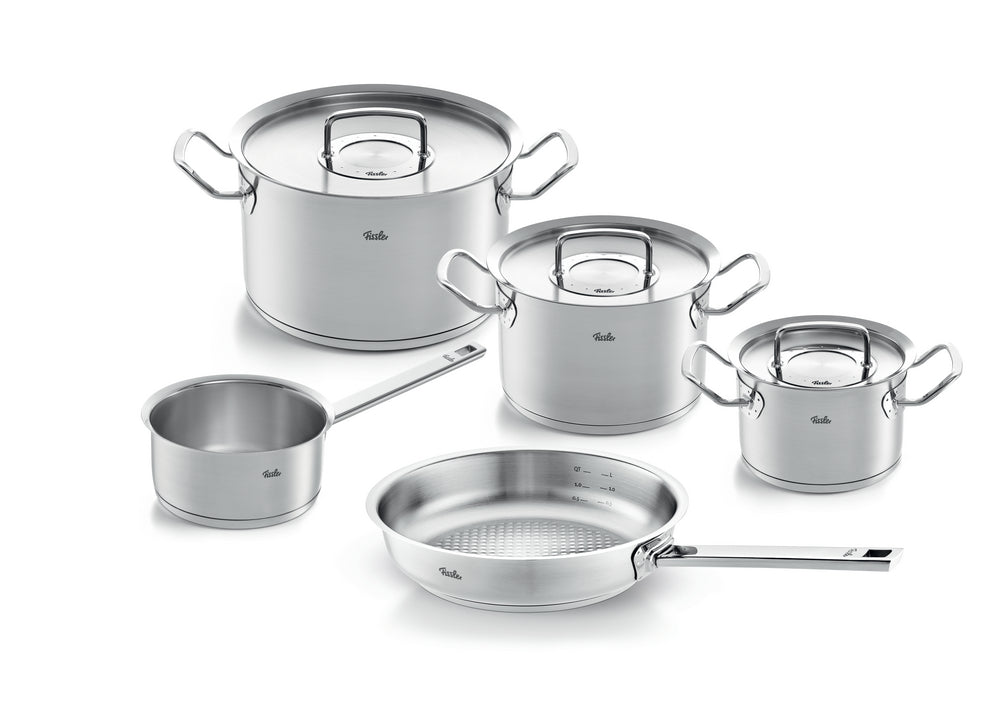
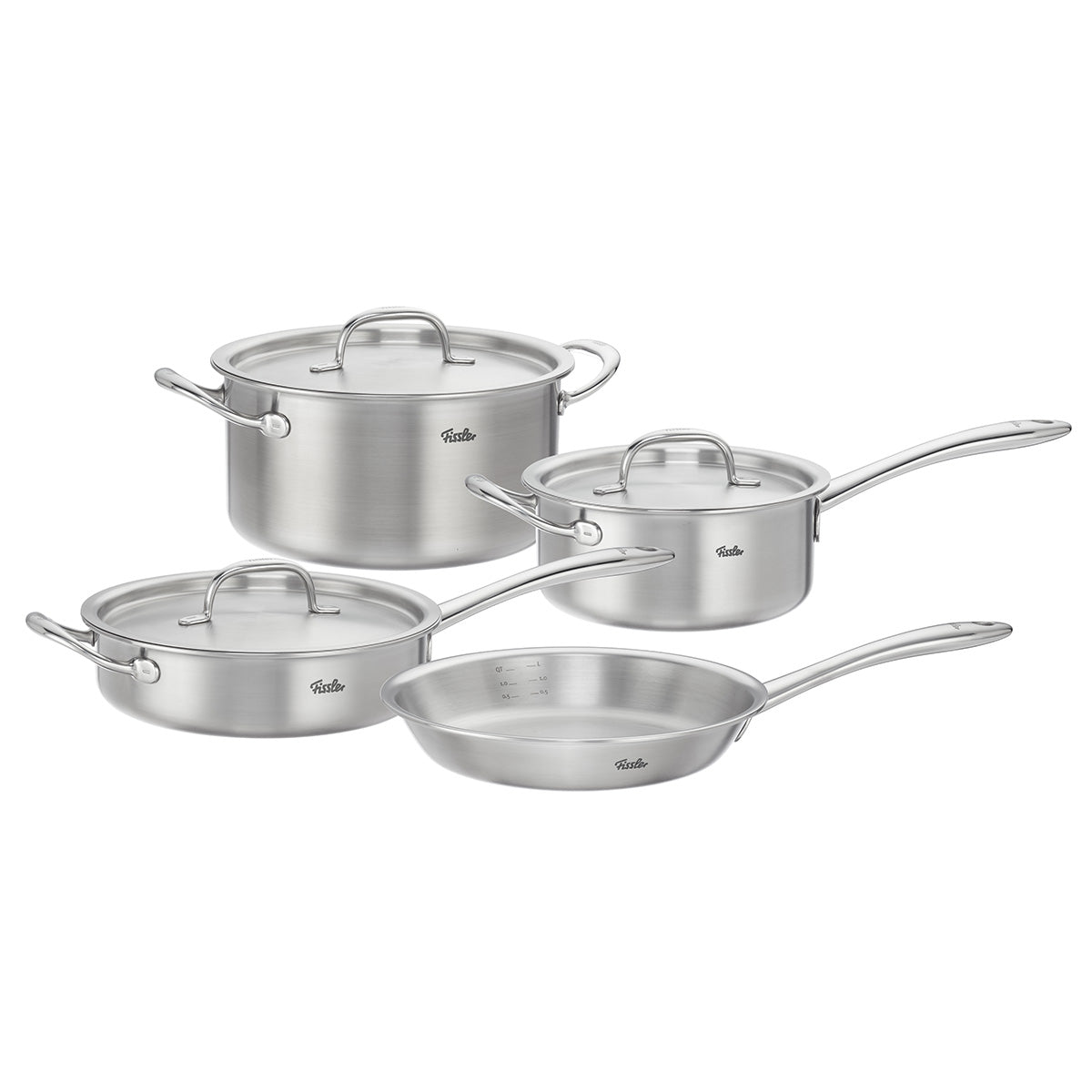
At Fissler, 18/10 stainless steel is used across stainless steel cookware collections as part of a broader approach to long-lasting performance and craftsmanship. The material itself is not what makes cookware great, but it is an important part of the overall system.
FAQ
What is 18/10 stainless steel?
18/10 stainless steel is an alloy containing 18% chromium and 10% nickel. It is widely used in cookware because of its durability, corrosion resistance, and non-reactive cooking surface.
What does 18/10 mean in cookware?
The numbers refer to the percentage of chromium and nickel in the steel. Chromium helps resist corrosion, while nickel improves durability and surface stability.
Is 18/10 stainless steel better than 18/8?
Both can perform well, but 18/10 contains more nickel, which generally improves corrosion resistance and long-term durability.
Is 18/10 stainless steel food safe?
Yes. 18/10 stainless steel is widely used for food-contact applications because it provides a stable, non-reactive cooking surface.
Does 18/10 stainless steel rust?
It is highly resistant to rust and corrosion, but proper care is still important to maintain its appearance and performance over time.
Is 18/10 the best stainless steel grade for cookware?
Many manufacturers consider 18/10 the benchmark for premium stainless steel cookware because it balances durability, corrosion resistance, and long-term performance.
The Bottom Line
18/10 stainless steel is more than a specification on a product label. It is an indicator of how cookware is designed to perform over time.
When paired with thoughtful construction, quality materials create cookware that delivers consistency, durability, and confidence in the kitchen.
Because great cooking is not just about what happens today. It's about having tools that are ready for the meals, techniques, and moments still to come.