
5-Ply vs. Tri-Ply Cookware: What the Difference Actually Means
When comparing 5-ply vs tri-ply cookware, the difference comes down to how heat is controlled. Tri-ply uses three bonded layers for reliable everyday cooking, while 5-ply adds additional layers for more even heat distribution and greater precision. As techniques become more advanced, that added control becomes more noticeable.
The difference between 5-ply and tri-ply cookware is simple: 5-ply offers more even heat and better control, while tri-ply provides solid everyday performance.

What Is “Ply” in Cookware?
“Ply” in cookware refers to the number of metal layers bonded together to form the pan.
Stainless steel alone is durable but not a great heat conductor. Aluminum heats quickly and evenly but lacks strength. When bonded together, these materials create cookware that delivers both control and longevity.
This is known as clad cookware construction, or multi-ply stainless steel construction, where each layer has a role:
- Stainless steel for durability and a non-reactive surface
- Aluminum for heat conduction and responsiveness
- Additional layers for stability and consistency
Stainless steel, particularly 18/10, is also non-reactive and suitable for food contact, which is why it’s widely used as a cooking surface.
This type of multi-ply stainless steel construction is designed to balance durability with consistent heat performance across the cooking surface.
Tri-Ply (3-Layer): What You Get
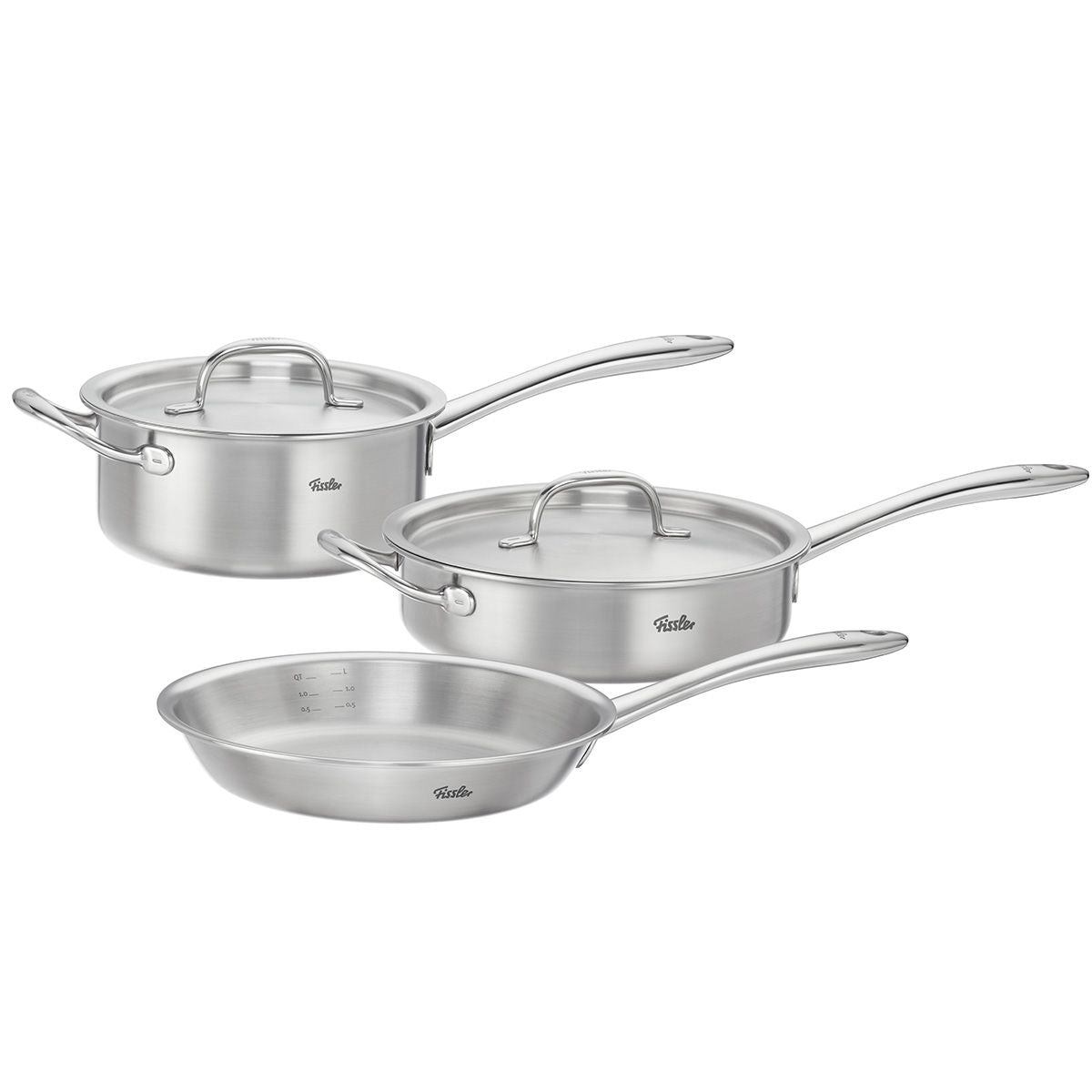
Tri-ply cookware uses three bonded layers: stainless steel, an aluminum core, and stainless steel again.
It is the foundation of many stainless steel cookware designs because it delivers balanced, reliable performance.
What tri-ply does well:
- Heats quickly
- Distributes heat evenly across the base
- Feels lighter and easier to handle
- Comes at a more accessible price point
Where it has limits:
On larger pans, heat can taper slightly toward the edges. For everyday cooking, this is rarely noticeable, but it can become more apparent in precision-focused techniques.
Tri-ply performs well for everyday cooking, but offers less control as techniques become more demanding. As you move into more precise cooking, those differences begin to show.

5-Ply (5-Layer): What Changes
5-ply cookware adds two additional layers, typically alternating between stainless steel and aluminum.
This changes how heat moves through the pan.
What improves:
- More even heat from center to edge
- Greater temperature stability
- More controlled cooking surface
Instead of heat concentrating in one area, it spreads more gradually and consistently.
Where it matters most:
- Searing proteins evenly
- Cooking sauces that require control
- Working with larger cooking surfaces
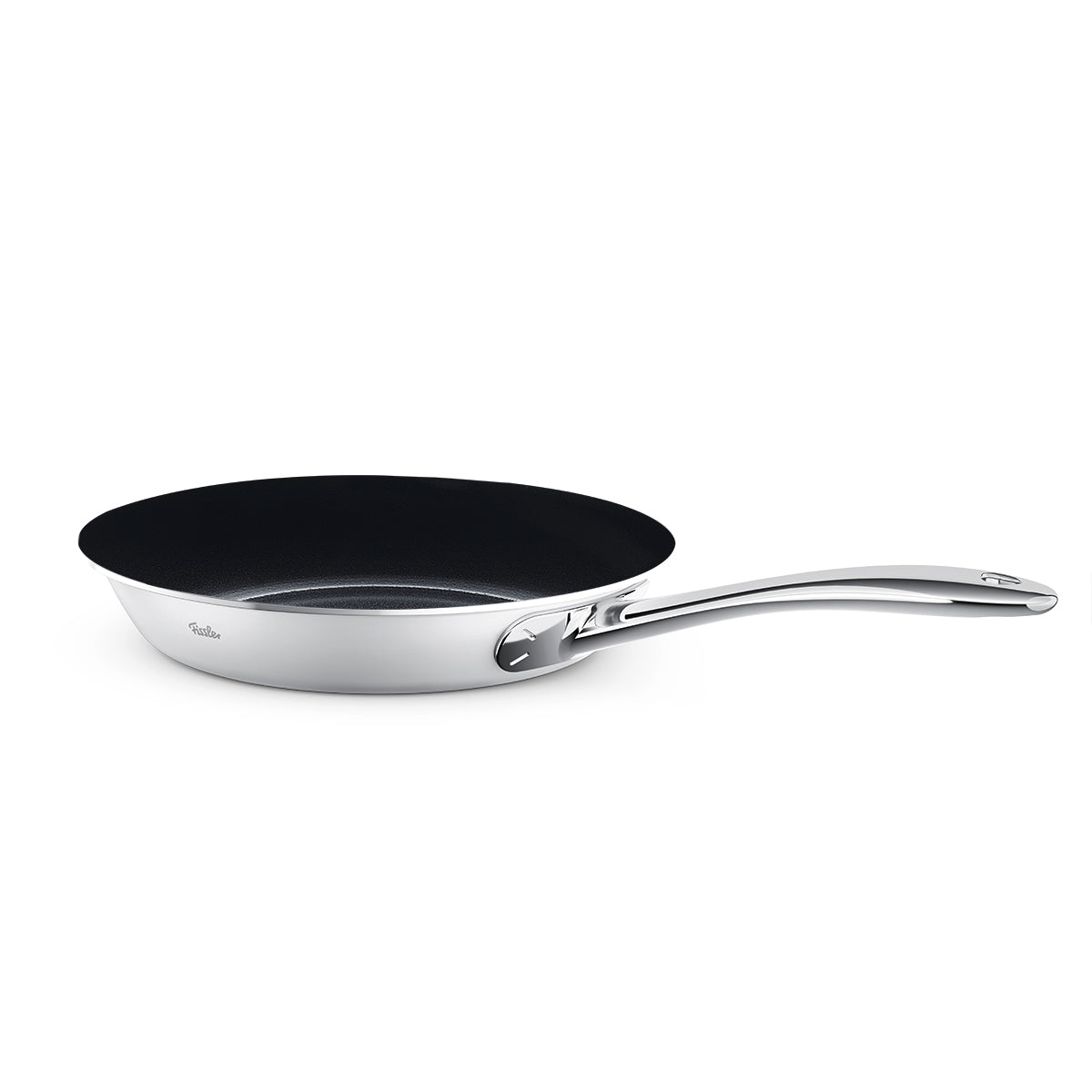
In practice, a 5-layer construction like Fissler’s M5 Pro-Ply™ uses this layered design to create a more stable cooking environment. The result is not just heat, but control over how that heat behaves across the entire pan.
👉 Explore the M5 Pro-Ply collection
This added stability is what allows more consistent results, especially when precision matters.

Does Ply Count Actually Matter for Home Cooks?
Yes, but not always in the way people expect.
For everyday meals, tri-ply performs well and offers a solid foundation.
Where 5-ply becomes noticeable is in consistency and control:
- When cooking thicker cuts of meat
- When managing delicate sauces
- When using larger pans where edge performance matters
The key difference is not just performance today, but flexibility over time.
If you’re deciding between 5-ply vs tri-ply cookware, choosing 5-ply gives you more control as your cooking evolves, without needing to upgrade later.
What 5-Ply Looks Like in Practice
The difference becomes clear when you cook.
A well-built 5-ply pan:
- Holds heat steady when ingredients are added
- Reduces hot spots across the surface
- Responds more predictably to heat adjustments
This creates a more controlled cooking experience.
Instead of reacting to the pan, you start guiding it.
That is where a well-engineered 5-layer system, like M5 Pro-Ply™, becomes noticeable in everyday cooking.

What to Look for Beyond Ply Count
Ply count matters, but it is only one part of the equation.
1. Base Construction
A well-engineered base improves heat retention and overall stability.
2. Steel Quality
High-grade stainless steel, such as 18/10, resists corrosion and helps cookware maintain its appearance over time.
3. Bonding Quality
How the layers are bonded often has a greater impact on performance than the number of layers alone.
4. Rivet-Free Construction
A rivet-free interior creates a smooth cooking surface that's easier to clean and eliminates areas where food residue can collect.
5. Handle Design
Comfort, balance, and heat management all contribute to a better cooking experience.
6. Overall Build Integrity
Weight, finish quality, and manufacturing precision all play a role in long-term performance.
A higher ply count only matters when the entire system is built to support it.
For a deeper look at stainless steel cookware, including materials, construction, performance, and care, explore ourComplete Stainless Steel Cookware Guide.
FAQ
What does 5-ply mean in cookware?
5-ply cookware uses five bonded metal layers to improve heat distribution and stability.
Is 5-ply cookware better than tri-ply?
5-ply offers more control and more even heat, especially for precision cooking.
Does more ply always mean better cookware?
No. Material quality, bonding, and construction all play an important role.
Is 5-ply cookware worth it?
For cooks who value consistency and control, 5-ply can make a noticeable difference.
What is tri-ply cookware best for?
Tri-ply works well for everyday cooking tasks but may show limitations as techniques become more advanced.
What is multi-ply stainless steel cookware?
Multi-ply cookware refers to pans made with multiple bonded layers of metal, designed to improve heat distribution and durability.
The Bottom Line
The difference between 5-ply and tri-ply comes down to how a pan supports the way you cook.
Some meals come together quickly. Others ask more of you. More attention. More control. More intention.
The right cookware grows with you in those moments. It gives you consistency when it matters and confidence when you need it most.
Because in the end, it’s not about the number of layers. It’s about what you’re able to create with them.