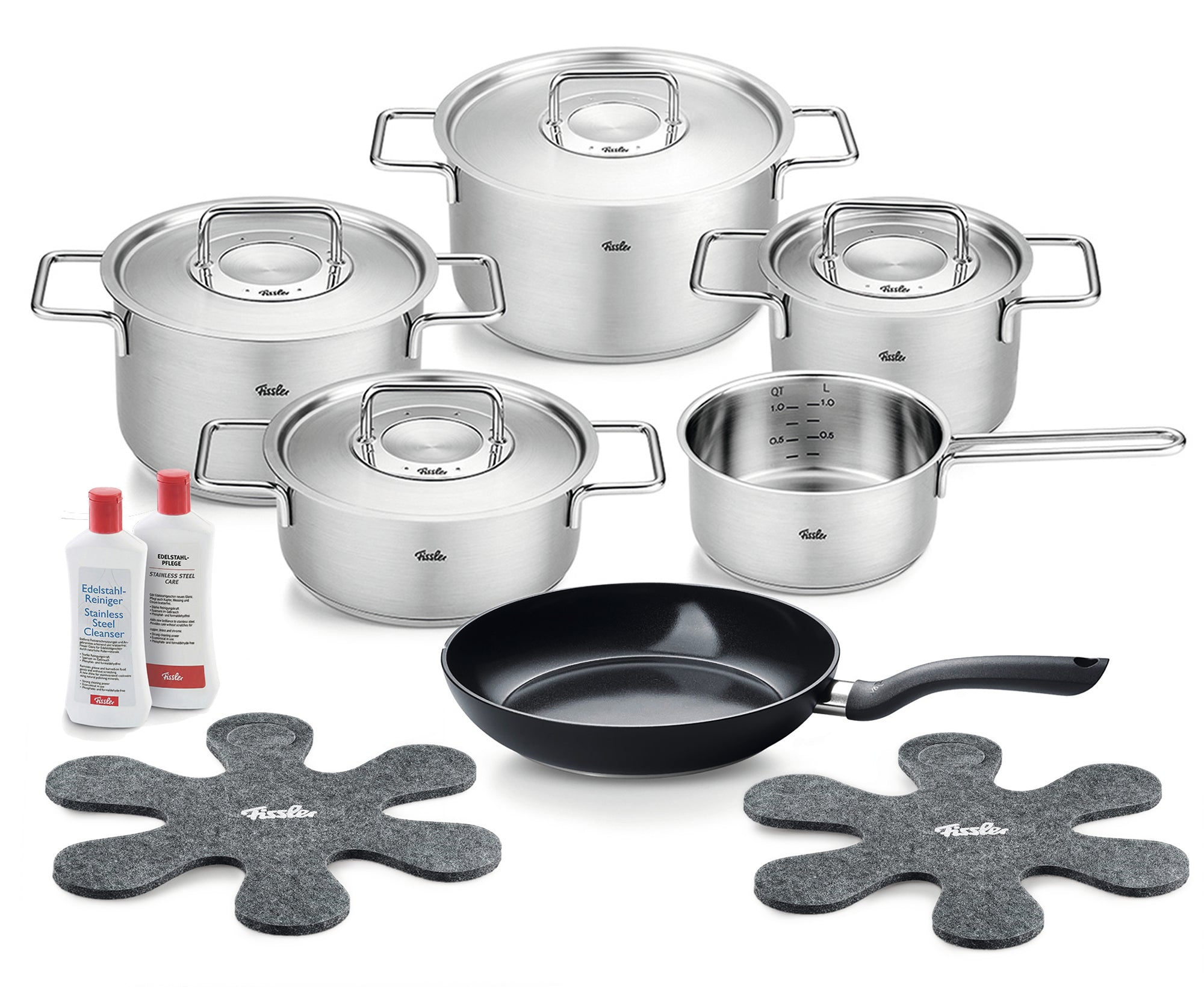

Best Cookware for Induction Stovetops: What to Look For
If you've recently switched to induction cooking, one of the first questions you'll likely ask is: what cookware works on induction?
The answer is simple: induction cooktops require cookware with a magnetic base. Stainless steel, cast iron, and some ceramic-coated cookware work well on induction, while aluminum, copper, and glass cookware generally do not unless they include a magnetic induction-compatible layer.
Every current Fissler cookware collection, including stainless steel cookware, Ceratal® ceramic cookware, and pressure cookers, is induction-compatible and designed to perform across all modern stovetop types.
But compatibility is only part of the story. The best cookware for induction not only works with the cooktop, but also heats evenly, responds quickly to temperature changes, and delivers consistent cooking performance.
How Induction Cooktops Work (The 30-Second Version)
Induction cooktops heat cookware directly using a magnetic field rather than heating the cooking surface itself.
When induction-compatible cookware is placed on the cooktop, the magnetic field generates heat within the cookware. This allows induction cooking to heat quickly, respond rapidly to temperature adjustments, and improve energy efficiency.
Because induction relies on magnetism, not all cookware materials will work.
This is why understanding induction cookware is important before purchasing new pots and pans.
What Makes Cookware Induction-Compatible?
Induction-compatible cookware contains a magnetic material that allows it to interact with the cooktop's magnetic field.
In most cases, cookware will work on induction if a magnet sticks firmly to the bottom.
Cookware Materials That Usually Work on Induction
- Stainless steel cookware with a magnetic base
- Cast iron cookware
- Carbon steel cookware
- Ceramic-coated cookware with a magnetic induction base
Cookware Materials That Usually Do Not Work on Induction
- Aluminum cookware without a magnetic base
- Copper cookware without a magnetic base
- Glass cookware
- Ceramic cookware without an induction-compatible base
A quick magnet test is often the easiest way to determine whether cookware is induction-compatible.
Best Cookware Materials for Induction
The best cookware for induction combines magnetic compatibility with durability, responsiveness, and consistent heat distribution.
Stainless Steel: The Most Versatile Choice
For most home cooks, stainless steel is one of the best cookware materials for induction.
High-quality stainless steel cookware offers:
- Excellent durability
- Non-reactive cooking surfaces
- Versatility across cooking techniques
- Long-term performance
- Compatibility with induction cooktops
Because stainless steel works equally well for searing, sautéing, simmering, and everyday cooking, it is often considered the foundation of an induction-ready kitchen.
👉 Learn what 18/10 stainless steel means and why it matters
Cast Iron: Excellent Heat Retention
Cast iron performs exceptionally well on induction because it is naturally magnetic.
Its ability to retain heat makes it ideal for:
- Searing
- Baking
- Braising
However, cast iron is heavier than stainless steel and generally requires more maintenance.
What About Ceramic Cookware?
Ceramic cookware can be induction-compatible, but only if it includes a magnetic base beneath the ceramic coating.
Many people assume ceramic cookware and induction are incompatible, but that is not necessarily true.
For example, ceramic-coated cookware such as Fissler Ceratal® incorporates an induction-compatible base, allowing it to perform on induction cooktops while offering the convenience of ceramic non-stick cooking.
👉 Explore Fissler's Ceramic Non-stick Cookware, made without added PFAS or PTFE
Why Cookware Construction Matters on Induction
Compatibility is only the starting point.
Induction cooktops respond quickly to temperature changes, making cookware construction and base design particularly important for achieving consistent cooking results.
At Fissler, induction performance is built into the cookware through engineered base technologies designed to deliver efficient heat transfer and even cooking results across all stovetop types.
For example:
- CookStar® bases are engineered for fast, even heating and efficient energy transfer, helping cookware respond quickly on induction cooktops while maintaining consistent performance.
- Superthermic bases are designed to distribute heat evenly across the cooking surface, providing reliable performance for everyday cooking tasks on induction and traditional stovetops alike.
Both base technologies are fully induction-compatible and reflect the important role cookware construction plays in overall cooking performance.
👉 Discover how construction layers affect cooking performance
What to Look for When Buying Induction Cookware
Not all induction cookware performs equally.
When evaluating cookware, consider more than whether it simply works on the cooktop.
1. A Flat Base
A flat cooking surface ensures consistent contact with the induction element.
Warped cookware can reduce efficiency and create uneven heating.
High-quality cookware is designed to maintain a stable, flat base over time, helping maximize contact with the cooktop and promote consistent heating performance. Fissler cookware is engineered with precision-manufactured bases designed to perform across all stovetop types, including induction.
2. Confirm Induction Compatibility
Look for:
- Induction symbols
- Manufacturer specifications
- Magnetic compatibility
This is particularly important when purchasing ceramic-coated or non-stick cookware.
3. Quality Materials
Material quality influences durability, responsiveness, and long-term performance.
High-quality stainless steel remains one of the most versatile options available for induction cooking.
4. Comfortable, Durable Handles
Induction cooking often reaches temperature quickly, making control and handling important.
Look for cookware with well-designed, ergonomic handles that provide comfort and stability.
5. A Complete Cookware System
If you're building an induction-ready kitchen, consider how different cookware types work together.
Induction-Compatible Cookware Options
If you're building an induction-ready kitchen, compatibility is only one consideration. Material, construction, and cooking style all influence which cookware is right for you.
The good news is that every current Fissler cookware collection is induction-compatible, making it easier to choose cookware based on how you cook rather than whether it will work on your cooktop.
Stainless Steel Cookware
Ideal for:
- Searing
- Browning
- Everyday cooking
- Long-term durability
👉 Explore Fissler's Stainless Steel Cookware, all induction compatible.
Ceramic Non-Stick Cookware
Ideal for:
- Eggs
- Fish
- Delicate foods
- Easy cleanup
👉 Explore Fissler's Ceramic Non-stick Cookware, made without added PTFE/PFAS and induction compatible
Pressure Cookers
Ideal for:
- Fast cooking
- Energy efficiency
- Weeknight meals
- Batch cooking
👉 Explore Fissler's Pressure Cookers, all induction compatible.
Common Induction Cookware Mistakes
Many induction cookware problems can be avoided with a few simple considerations.
Assuming All Stainless Steel Works on Induction
Not all stainless steel cookware is magnetic.
Always verify induction compatibility before purchasing.
Focusing Only on Compatibility
A pan may technically work on induction but still perform poorly if the base design or construction is inadequate.
Using Warped Cookware
Warped cookware can reduce contact with the induction surface and affect heating consistency.
Ignoring Material Differences
Different materials behave differently on induction.
The best choice depends on your cooking style, recipes, and preferences.
Assuming Ceramic Means Non-Compatible
Many modern ceramic-coated cookware collections are fully induction-compatible when paired with a magnetic base.
Using Glass Lids Beyond Their Intended Purpose
Glass lids are excellent for monitoring cooking progress, but rapid temperature changes or misuse can affect performance over time. Always follow the manufacturer's care and usage guidelines to help maintain long-term performance.
FAQ
What cookware works on induction cooktops?
Cookware with a magnetic base works on induction cooktops. Stainless steel, cast iron, carbon steel, and some ceramic-coated cookware are common examples.
What is induction cookware?
Induction cookware is cookware designed to work with induction cooktops by incorporating magnetic materials that interact with the cooktop's magnetic field.
Is stainless steel induction-compatible?
Many stainless steel cookware collections are induction-compatible, provided they contain a magnetic base.
Are ceramic pans induction-compatible?
Some ceramic pans are induction-compatible if they include a magnetic base beneath the ceramic coating.
What is the best cookware for induction?
For most home cooks, high-quality stainless steel cookware offers the best combination of durability, versatility, and induction performance.
How can I tell if my cookware works on induction?
A simple magnet test is often the easiest method. If a magnet sticks firmly to the bottom of the cookware, it will likely work on an induction cooktop.
The Bottom Line
The best cookware for induction combines compatibility, performance, and durability.
While magnetic compatibility is essential, cookware construction, base technology, and material quality all influence how cookware performs once it reaches the cooktop.
Whether you prefer stainless steel, ceramic non-stick, or pressure cooking, choosing induction-compatible cookware designed for long-term performance can help you get the most from your induction kitchen.
👉 Learn More About Cookware - CLICK HERE