
Does Stainless Steel Rust? (And How to Prevent It)
If you've spotted a rust spot on your cookware, you're probably wondering: does stainless steel rust?
The short answer is yes, stainless steel can rust under certain conditions. However, rust on stainless steel cookware is usually preventable, often reversible, and does not necessarily mean the cookware is damaged beyond use.
In most cases, rust develops when the protective surface layer of the steel is compromised by moisture, salt, harsh chemicals, or improper care. Understanding why it happens is the first step toward preventing it.
The Short Answer: Can Stainless Steel Rust?
Yes, stainless steel can rust, but it is significantly more resistant to rust than many other metals.
The reason stainless steel performs differently is because it contains chromium, which creates a protective barrier on the surface of the steel. This barrier helps shield the metal from moisture and oxygen, two key ingredients in the rusting process.
Under normal cooking conditions, quality stainless steel cookware is highly resistant to rust. However, prolonged exposure to certain conditions can weaken this protective layer and allow corrosion to develop.
The good news is that most rust spots found on stainless steel cookware are minor surface issues and can often be removed with proper cleaning.
Why Stainless Steel Is Rust-Resistant But Not Rust-Proof
Stainless steel is rust-resistant because of something called the chromium oxide layer.
When chromium in the steel comes into contact with oxygen, it forms an invisible protective film on the surface. This layer continuously helps protect the cookware from corrosion.
What makes stainless steel unique is that this protective layer can actually repair itself when exposed to oxygen. That is one reason stainless steel has become the material of choice for high-quality cookware.
However, stainless steel is not completely rust-proof.
The protective layer can be damaged by:
- Chlorine-based cleaners
- Bleach
- Prolonged exposure to standing water
- Salt left sitting on the surface
- Aggressive abrasive cleaning tools
- Lower-quality stainless steel
This is why quality matters.
Higher-grade materials, such as 18/10 stainless steel, are designed to provide stronger corrosion resistance and better long-term durability.
👉 Learn what 18/10 stainless steel means and why it matters
The Most Common Causes of Rust on Stainless Pans
Most rust spots don't appear overnight. They typically develop when a combination of moisture and surface damage is present.
Salt Left Sitting in Water
One of the most common causes of rust is adding salt to cold water and allowing it to sit before heating.
Salt can settle on the bottom of the cookware and temporarily disrupt the protective surface layer.
For best results, bring water to a boil before adding salt.
Chlorine and Harsh Cleaning Chemicals
Household bleach and chlorine-based cleaners can damage stainless steel surfaces.
Even small amounts can weaken the protective chromium oxide layer over time.
When cleaning cookware, choose products designed specifically for stainless steel.
Prolonged Soaking
Leaving cookware submerged in water for extended periods can create conditions that encourage corrosion, particularly around water lines or residue buildup.
While occasional soaking is generally fine, it should not become a long-term storage method.
Abrasive Cleaning Tools
Steel wool and aggressive scrubbers can scratch the surface of the cookware.
Minor scratches do not automatically cause rust, but repeated abrasion can weaken the protective surface and make corrosion more likely.
Lower-Quality Steel
Not all stainless steel is the same.
Higher-quality stainless steel cookware is designed to provide stronger corrosion resistance and maintain its appearance over time.
👉 Explore how construction layers work alongside steel grade
Is It Rust or Just Discoloration?
Not every mark on stainless steel cookware is rust.
Many people mistake harmless discoloration for corrosion.
Common examples include:
Heat Tint
A rainbow-colored blue, purple, or gold tint can appear after cooking at high temperatures.
This is normal and does not indicate damage.
Mineral Deposits
White spots or cloudy residue are often caused by minerals in water.
These deposits can usually be removed with vinegar and water.
Food Residue
Brown stains may simply be baked-on oils or food residue rather than rust.
Before assuming cookware is rusting, it is worth identifying exactly what type of mark is present.
This is particularly important because stainless steel cookware discoloration is far more common than actual rust.
How to Remove Rust Spots from Stainless Steel Cookware
If you notice rust spots on a stainless steel pan, don't panic. In many cases, they can be removed with gentle cleaning methods.
Method 1: Baking Soda Paste
- Mix baking soda with a small amount of water to create a paste.
- Apply the paste directly to the rust spot.
- Let it sit for 15 to 30 minutes.
- Gently scrub with a soft sponge or non-abrasive pad.
- Rinse thoroughly and dry immediately.
Method 2: Use a Stainless Steel Cleaner
A stainless steel cleaner can help remove discoloration, stains, and light surface rust while restoring the appearance of the cookware.
- Wet the cookware surface.
- Apply a small amount of cleaner according to the manufacturer's instructions.
- Rub gently following the grain of the steel.
- Rinse thoroughly.
- Dry completely.
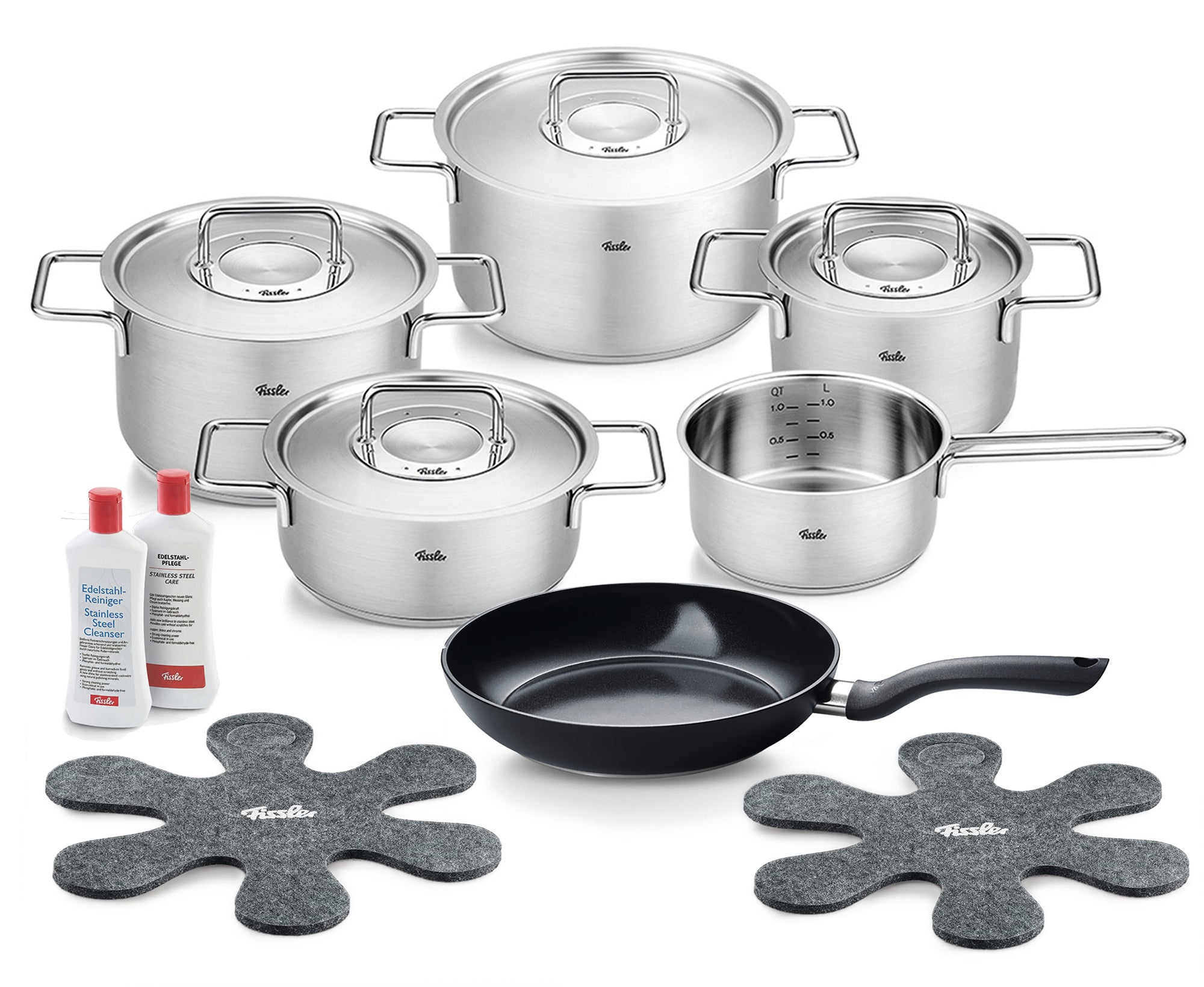
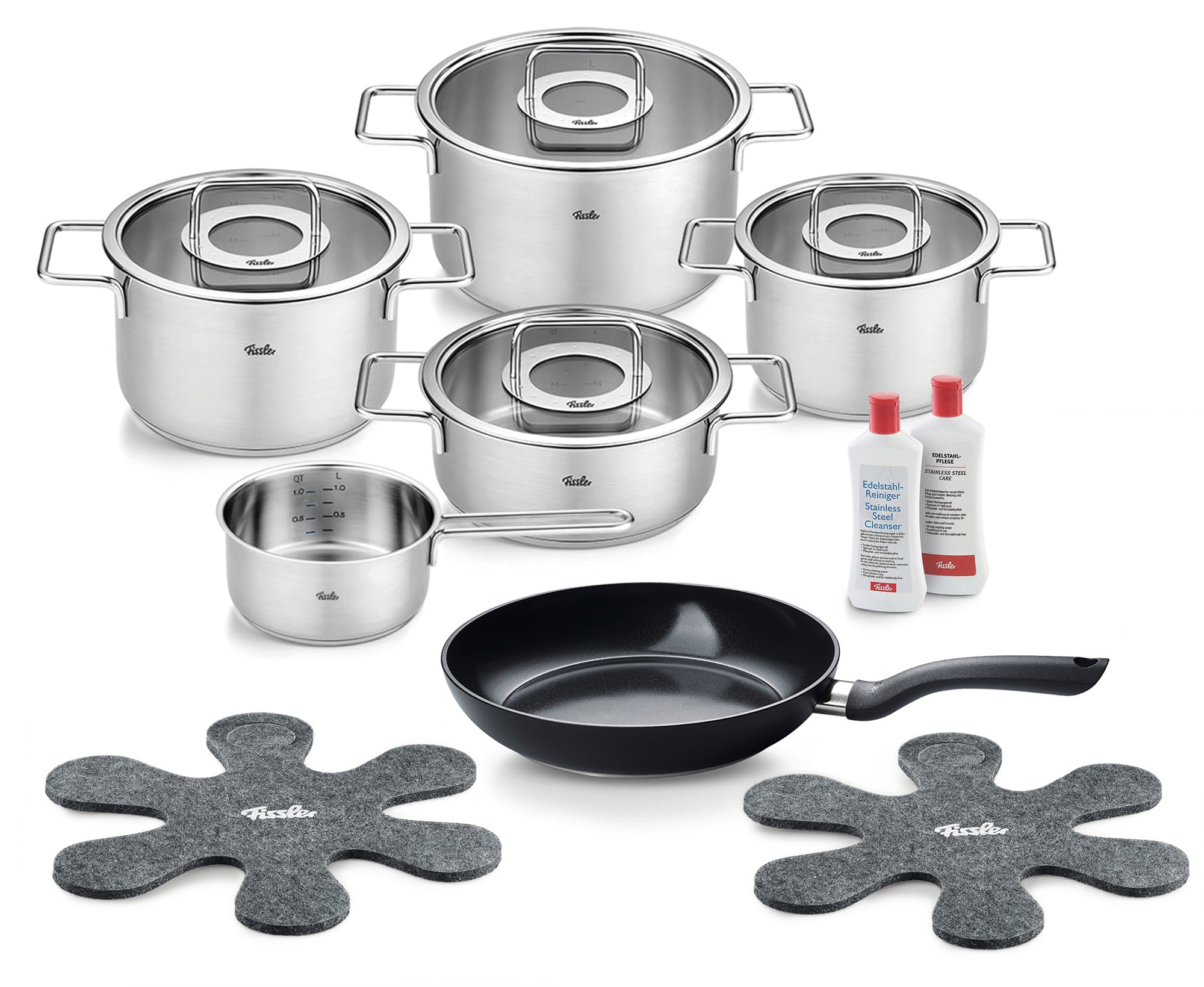
Many cookware manufacturers, including Fissler, offer cleaners specifically formulated for stainless steel cookware to help remove stains and maintain the finish over time.
👉 Explore Fissler Stainless Steel Cleanser
https://us.fissler.com/products/stainless-steel-cleanser
👉 Explore Fissler Stainless Steel Care
https://us.fissler.com/products/stainless-steel-care
What Not to Do
Avoid:
- Steel wool
- Bleach
- Harsh chemical cleaners
- Abrasive grinding pads
These products can cause additional damage and make future corrosion more likely.
How to Prevent Rust Going Forward
Preventing rust is usually easier than removing it.
A few simple habits can help protect stainless steel cookware for years.
Dry Immediately After Washing
After cleaning, dry cookware thoroughly with a towel rather than allowing water to air dry on the surface.
Avoid Prolonged Soaking
Soaking can be useful for loosening food residue, but cookware should not remain submerged for extended periods.
Use Appropriate Cleaning Products
Choose cleaners designed for stainless steel and avoid chlorine-based products.
Products specifically formulated for stainless steel cookware can help remove residue, maintain the finish, and support long-term appearance retention.
👉 Explore Fissler Stainless Steel Care & Maintenance Products
Add Salt to Boiling Water
If you're cooking pasta, potatoes, or other foods that require salted water, wait until the water reaches a boil before adding salt.
Choose Quality Stainless Steel
Material quality matters.
Higher-grade stainless steel provides stronger resistance to corrosion and is better equipped to maintain its finish through years of use.
👉 Explore Fissler stainless steel frying pans made with quality 18/10 stainless steel
Where Quality Stainless Steel Makes a Difference
No cookware material is completely immune to wear, but quality materials can improve long-term performance.
18/10 stainless steel is widely used in premium cookware because it provides a balance of:
- Corrosion resistance
- Durability
- Non-reactive cooking performance
- Long-term appearance retention
At Fissler, 18/10 stainless steel is used throughout stainless steel cookware collections as part of a broader commitment to long-lasting performance and craftsmanship.
The material itself is not the entire story, but it plays an important role in helping cookware withstand years of everyday cooking.
FAQ
Does stainless steel rust?
Yes. Stainless steel can rust under certain conditions, particularly when exposed to moisture, salt, chlorine, or damage to its protective surface layer.
Can stainless steel pans rust?
Yes. Even stainless steel pans can develop rust spots if exposed to conditions that compromise their corrosion-resistant surface.
Are rust spots on stainless steel pans dangerous?
Small surface rust spots are generally not a sign that cookware must be discarded. In many cases, they can be removed through proper cleaning and maintenance.
What causes rust spots on stainless steel cookware?
Common causes include salt exposure, chlorine-based cleaners, prolonged soaking, abrasive cleaning tools, and lower-quality steel.
How do I remove rust from a stainless steel pan?
A baking soda paste can often remove light surface rust. For tougher stains, discoloration, or rust spots, use a stainless steel cleaner designed for cookware and follow the manufacturer's instructions. Fissler's Stainless Steel Cleanser and Stainless Steel Care products are specifically formulated to help remove stains and maintain the finish of stainless steel cookware.
Is stainless steel cookware discoloration the same as rust?
No. Discoloration is often caused by heat, minerals, or food residue and is typically cosmetic rather than corrosive.
The Bottom Line
Does stainless steel rust? Yes, under certain conditions.
But high-quality stainless steel cookware is designed to resist corrosion, and most rust issues are preventable with proper care.
Understanding what causes rust, how to remove it, and how to prevent it allows you to focus less on maintenance and more on cooking.
Because the best cookware is not just designed to perform today. It's designed to support years of meals, techniques, and moments in the kitchen.